Premium Antibacterial Plastic Cutting Board - Professional Kitchen Series
- Model
- CB-2818-35
Item specifics
- Material
- Food-grade PP (polypropylene)
- Size
- 28.5 × 18.5 × 0.35 cm
- Thickness
- 3.5 mm
- Weight
- approx. 160 g
- Color
- Beige / White
- Shape
- Rectangular, rounded corners
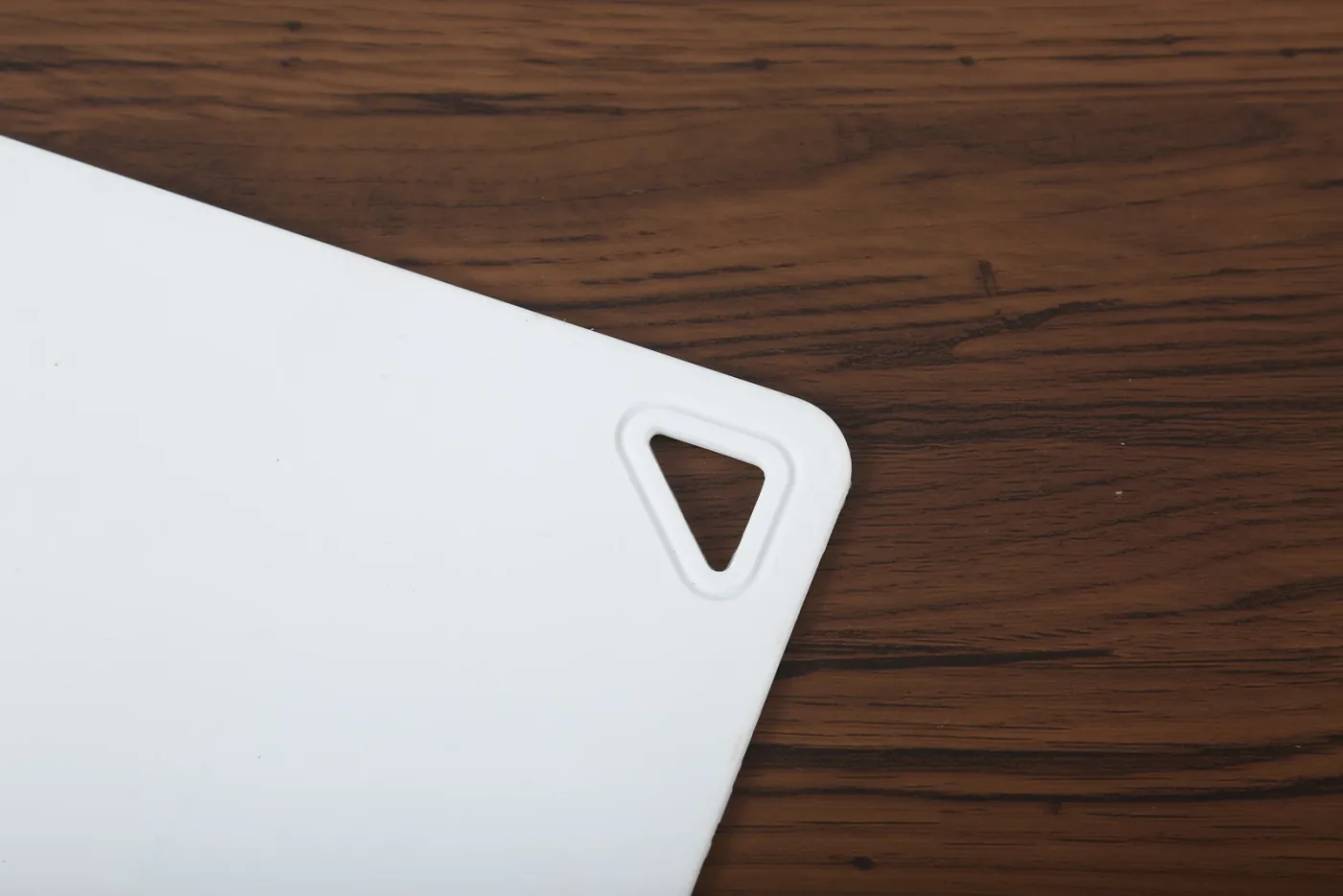
- Hanging hole
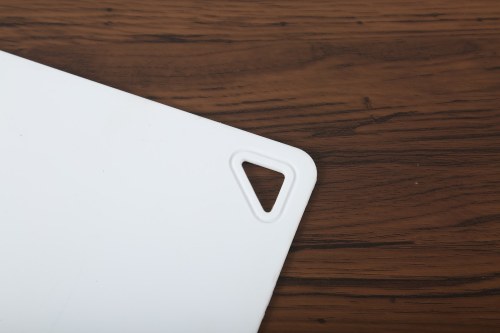
- Triangular through-hole with reinforced rim
- Surface
- Matte, both sides usable
- Feature
- Antibacterial additive, BPA-free
- Care
- Dishwasher safe
- Certification
- FDA, LFGB, ISO 9001
Review
Description
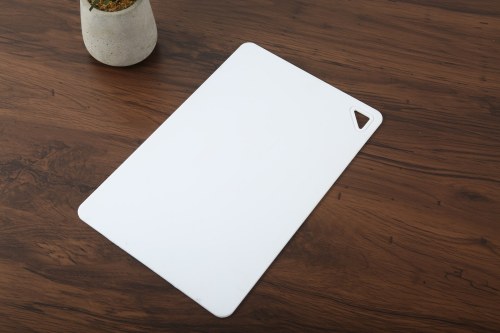
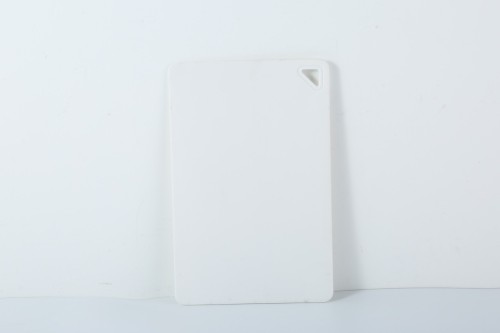
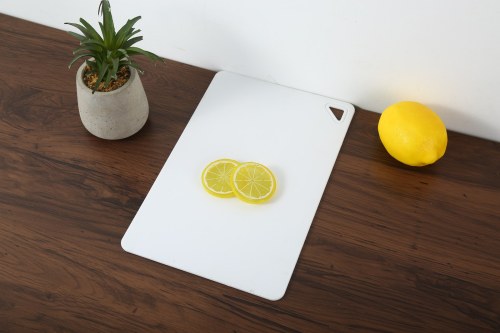
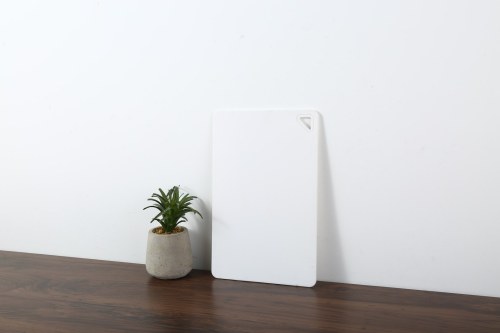
28.5 × 18.5 × 0.35 cm · Cream PP A thin, cream-coloured board that lives in the drawer and comes out for the work the main board should not touch. It is moulded in one piece from food-grade polypropylene, with the antibacterial additive compounded into the polymer rather than applied as a coating, and a reinforced triangular hole in one corner so it can be hung wet and lifted with one finger. This is the size of a board you keep next to the sink, not the one you break down a chicken on. In a professional kitchen that makes it the second board in a colour-coded system: cream and white are conventionally assigned to bakery, dairy and ready-to-eat prep, which is exactly the work that should never touch the board used for raw protein. At home it is the fruit board, the bread board, and the board that goes into a camper van or a first flat because it weighs about as much as a paperback. Three kinds of work suit it: Three and a half millimetres of polypropylene is not a chopping block, and selling it as one is how thin boards end up with a bad reputation. It has no mass to stay put under a heavy strike and no tolerance for heat. If the job is splitting a chicken or breaking a rib rack, this is the wrong board and we will say so. Thin boards are criticised as flimsy, and most of that criticism is aimed at the wrong thing. A 3.5 mm board is stable as long as it is fully supported: on a flat counter the entire underside makes contact, so there is nothing to flex. It only feels unstable when it bridges a sink edge or sits on a slatted rack and two ends carry the load. What the thin section buys: What it costs: no impact absorption under a cleaver, no thermal mass, and a flat surface is a requirement rather than a convenience. Look at the corner: the hole is triangular with rounded points, and the plastic around it is visibly thicker than the board itself. That rim is formed in the tool, not added afterwards, and it is the reason a 3.5 mm board can hang from a single point without the material tearing out at the edge. The additive is compounded into the polypropylene before the board is moulded, so it is part of the material rather than a surface treatment that can be scrubbed away. Supplier test data reports a 99.9% reduction against the organisms tested. Two qualifications we would rather state than leave out: We send the antibacterial test report with the quotation, so your technical team can check the method and the organisms before the order is placed. Four properties that matter more than the word “premium”: Stock: the 28.5 × 18.5 × 0.35 cm board in cream, model CB-2818-35, from existing tooling. Colour and packing changes run on the same mould. Made to your order: We send a stock sample first, so the surface, the hole and the colour can be checked against your shelf before a custom run is committed. We are the factory, not a trading company. Taizhou Bingxin New Materials has been injection moulding for 11 years, in a 4,000 m² plant running eleven Haitian machines, the largest at 530 tonnes of clamping force. The cutting board range covers more than 100 models backed by 20-plus design patents, at a monthly output of around 300,000 pieces. Food-contact documentation: FDA-compliant material, LFGB, ISO 9001, BSCI and SGS. Reports are issued per order, with the batch reference on the packing list. Enough to slice, prep and portion; not enough to chop through bone. On a flat counter the whole board is supported and will not flex. A cleaver will mark it and, with enough force, cut into it. The additive is in the polymer, so washing does not strip it the way it strips a coating. It is also not a lifetime guarantee. We quote the tested figure and supply the report rather than promising permanence. Yes, on the top rack. Heat is what limits it, not water, so keep it out of a very hot drying cycle if you want the board to stay flat. No. Polypropylene softens around 100 °C and a pan off the hob is well above that. Use a trivet. For fruit, bread, sandwiches and ready-to-eat prep, yes. For a whole chicken or a large batch of vegetables, a 40 × 30 cm board is the better fit — many kitchens keep both. Yes. Pantone-matched colour plus silk-screen or in-mould branding, against a minimum run per colour that we confirm against your quantity. It depends on the colour and packing combination: stock cream runs lower than a custom Pantone match. Tell us the quantity you have in mind and we will confirm which tier applies. Yes. FDA-compliant material, LFGB, ISO 9001, BSCI and SGS documentation is issued per order. Name the market and the standard your buyer requires and we will send the matching report. Size, colour, quantity and the market you are selling into. You get price, lead time and the test reports for that market in one reply. Factory direct · OEM and ODM · FDA-compliant, LFGB and ISO 9001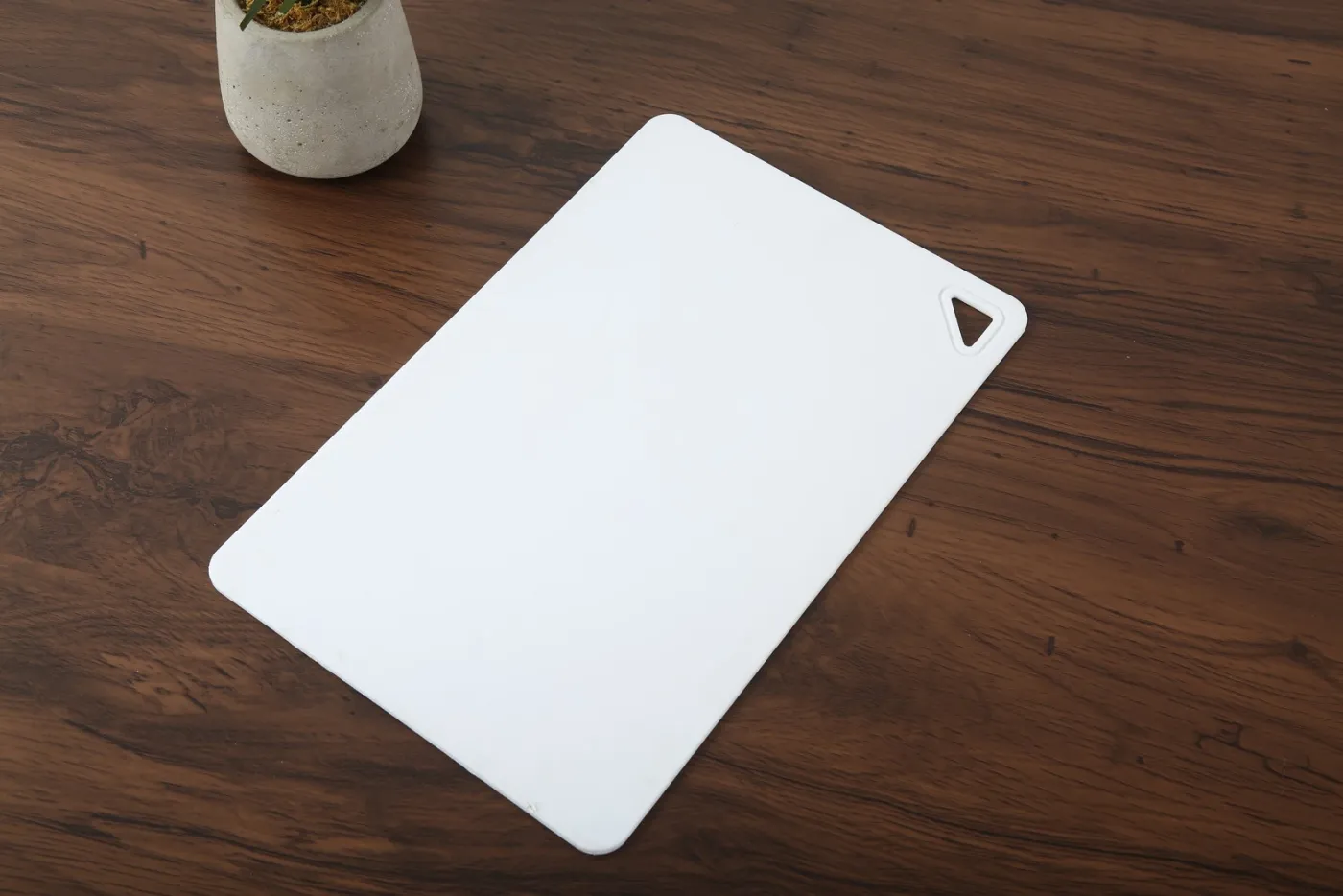
What a 28.5 × 18.5 cm Board Is Actually For
What the Board Cannot Do
Right for
Wrong for
The 3.5 mm Trade-Off, Stated Plainly
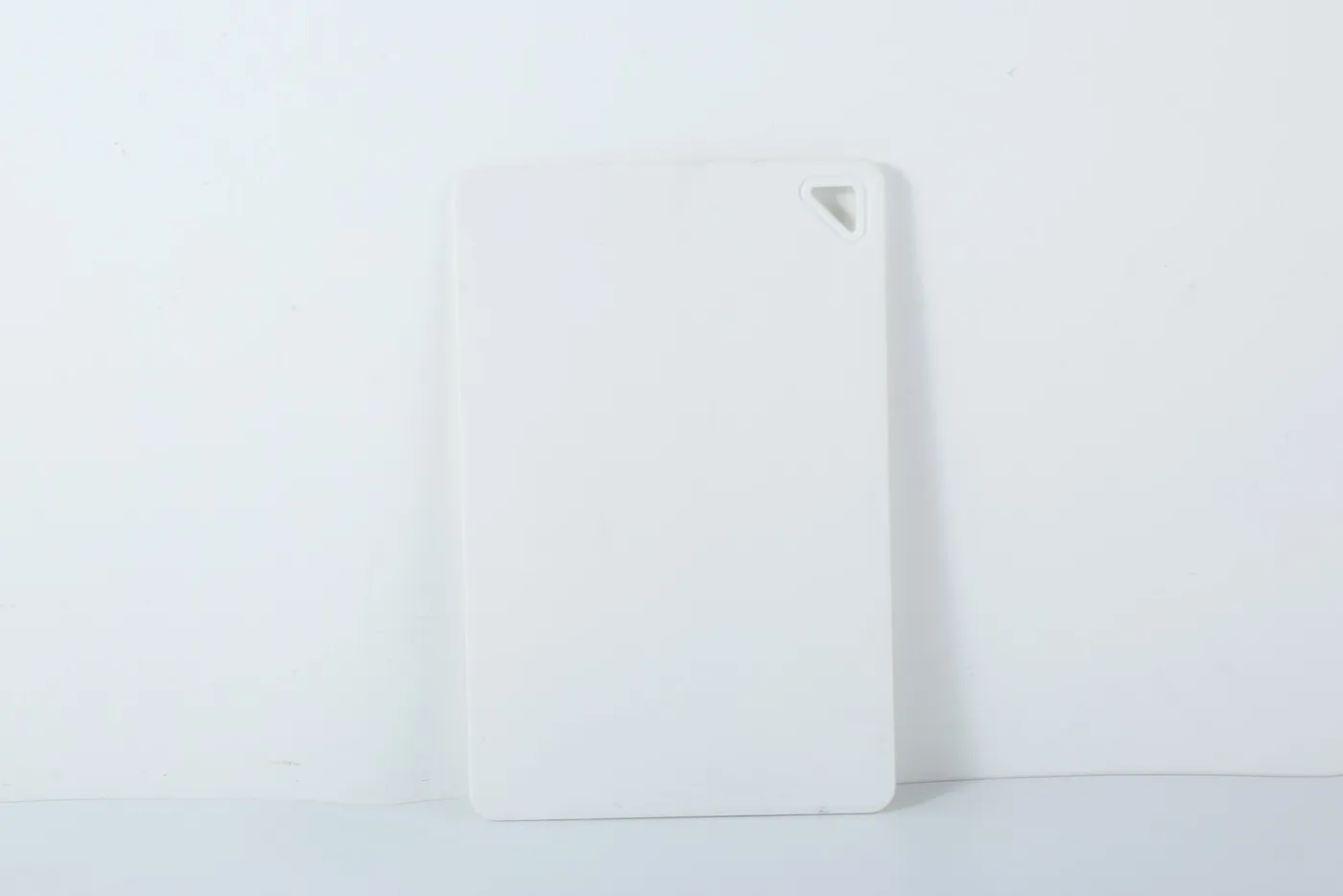
The Triangular Hole Is Not Decorative
What “Antibacterial” Means on This Board
Food-Grade Polypropylene in Daily Use
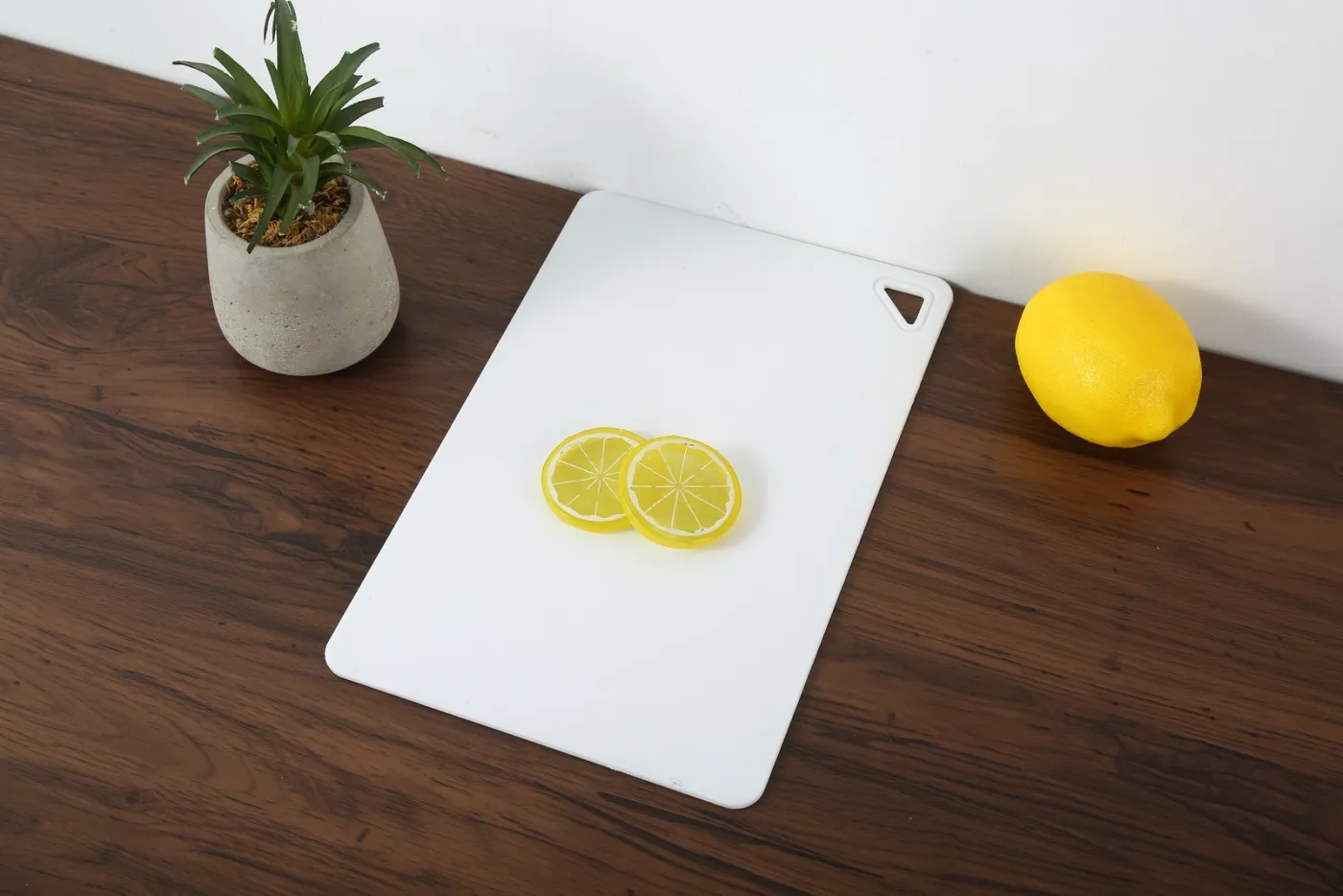
What You Can Specify
Where the Board Comes From
Frequently Asked Questions
Is 3.5 mm thick enough to cut on?
Does the antibacterial effect wash out?
Can it go in the dishwasher?
Can I put a hot pan on it?
Is 28.5 × 18.5 cm big enough for a family?
Can you make it in our colour and with our logo?
What is the MOQ?
Do you supply the food-contact reports for our market?
Send Us Your Specification