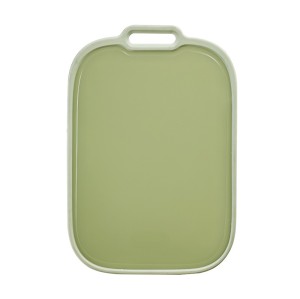
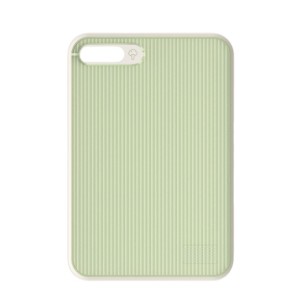
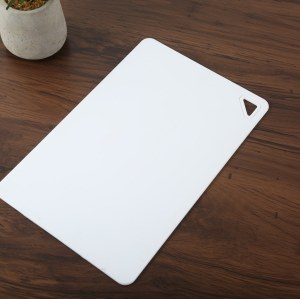
Wholesale Antibacterial Plastic Cutting Board 10" X 14", Featuring Non-Slip Feet
- Price
- US $2.11
- Model
- 6640 Antibacterial Cutting Board
- MOQ
- 200 piece
Item specifics
- Material
- TPE frame with wheat-straw PP cutting face
- Size
- 37 × 27 × 1 cm
- Thickness
- 10 mm
- Colour
- Green frame, pale speckled cutting face
- Face icons
- Knife, fish and meat, moulded into the face
- Grinding panel
- Recessed dotted panel, bottom edge
- Underside
- Embossed non-slip pattern
- Dishwasher
- Yes
- Certification
- FDA, LFGB
- Reference price
- USD 2.11/piece FOB, subject to quantity and packaging
- Port
- Shanghai or Ningbo
Review
Description
37 × 27 × 1 cm · model 6640 · TPE frame, wheat-straw face Three small icons are printed into the top right of the cutting face on this board: a knife, a fish and a joint of meat. They are the reason this model exists. Everything else about it — the two-layer moulding, the wheat-straw surface, the grinding panel at the bottom edge — supports what those three marks ask a kitchen to do. Most cutting boards sold to wholesalers are differentiated by colour, handle shape or price. This one is differentiated by a rule printed on it, and that changes who it sells to: housewares buyers who need a reason to stock a second board, and foodservice buyers who have to show separation of raw and ready-to-eat food during an inspection. An antibacterial claim asks a buyer to believe a laboratory number. A printed icon asks them to do something, and buyers act on instructions far more reliably than on numbers. On this board the instruction is: one face for raw protein, and the marks tell you which protein. The practical value shows up in two places. In a home kitchen, the board removes the argument about which side was used for the chicken — the answer is printed there. In a commercial kitchen, it gives a supervisor something to point at during a hygiene walk-through, which is worth more than a claims sheet that stays in a drawer. There are three marks, not five. Vegetables, bread, cheese and cooked food have no icon of their own, so they share the plain areas of the face. That is not a defect to be smoothed over in the copy — it is worth telling a buyer plainly, because a distributor who discovers the gap after ordering will assume the rest of the description was inflated too. If a retail programme needs five categories, the icons can be changed at tooling stage. Ask for the mould drawing and confirm the artwork before the order is placed, not after. The board is not one plastic with a coloured edge sprayed on. It is two materials moulded together: a TPE frame, and a cutting face of polypropylene loaded with wheat-straw fibre. The frame is the part that takes the knocks and the grip; the face is the part the knife touches. The wheat straw is not decoration. It is a filler that lowers the amount of virgin resin in the board and gives the surface its speckled, slightly matte appearance. It also makes the face marginally harder and less springy than unfilled plastic, which is a trade-off worth understanding before choosing between this model and an all-TPE board. Look at the corner in the photograph above. The green frame is not flush with the cutting surface; it stands a little above it. On a 10 mm board that step is small, but it does the same job as a juice groove on a heavier board: it holds liquid inside the working area instead of letting it run onto the worktop. The underside is different again. It is embossed with a raised pattern that grips the counter, which is what keeps a board of this size from skating while it is being used. It is a moulded texture, not separate rubber feet — there is nothing to fall off, and nothing to trap water underneath. At the bottom edge of the cutting face there is a recessed rectangle filled with a dense field of small raised dots. It is a grinding panel, and it is the detail most likely to be missed in a photograph and then discovered by the end customer with no explanation. The additive is compounded into the polymer before the board is moulded. It is not a coating, so it does not wash off in the dishwasher and it does not wear away where the knife cuts. That is the honest version of the claim, and it is already more than most listings say. What it does not mean: the board is not self-cleaning, it does not sterilise food, and it does not remove the need to wash it after raw meat. A buyer who is told otherwise will eventually find out, and the return will cost more than the sale was worth. Antibacterial performance figures are only meaningful when quoted against a named test method, usually ISO 22196 or JIS Z 2801. Ask for the report for the exact material batch rather than accepting a percentage on its own. The frame colour is the variable most buyers change first, and it is the cheapest change because it does not touch the cutting face or the tooling. Logo placement works best on the plain area of the face opposite the icons; putting a logo over the icon block makes both harder to read. Sizes can be adjusted, but any change to the outline also changes the tooling, so the sensible order of decisions is: confirm the size and icon artwork first, choose colours second, and settle packaging last. Packaging decisions are quick to change; mould decisions are not. Reference price is FOB and excludes packaging, printing and freight. Final cost depends on colour combination, logo method and carton configuration — send the specification and a quote follows. No. The wheat straw is a fibre filler that reduces the amount of virgin polymer used, but the polypropylene matrix behaves like polypropylene and will not break down in soil or water. Any listing that calls a wheat-straw composite biodegradable is overstating it. They are compounded into the polymer rather than applied to the surface, so dishwashing does not remove them. That is different from saying the board stays hygienic on its own — it still needs washing after raw meat. Yes, at tooling stage. The icons are part of the mould, so the artwork has to be agreed before the tool is cut. Changing them on an existing tool is not a print job. The board withstands normal commercial wash cycles. Very high final-rinse temperatures will shorten the life of the TPE frame before they affect the cutting face, so check the machine settings against the sample. It depends on the colour combination and packaging format, because both affect set-up time. Send the requested configuration and a specific minimum will be quoted against it. Yes. Sample lead time and cost depend on whether the requested colour is a stock combination or a custom match, and both are confirmed at the quotation stage. Send the size, the colour combination and the food categories you want marked. Mould drawings and a quotation follow. OEM and ODM welcome · FOB Shanghai or Ningbo · T/T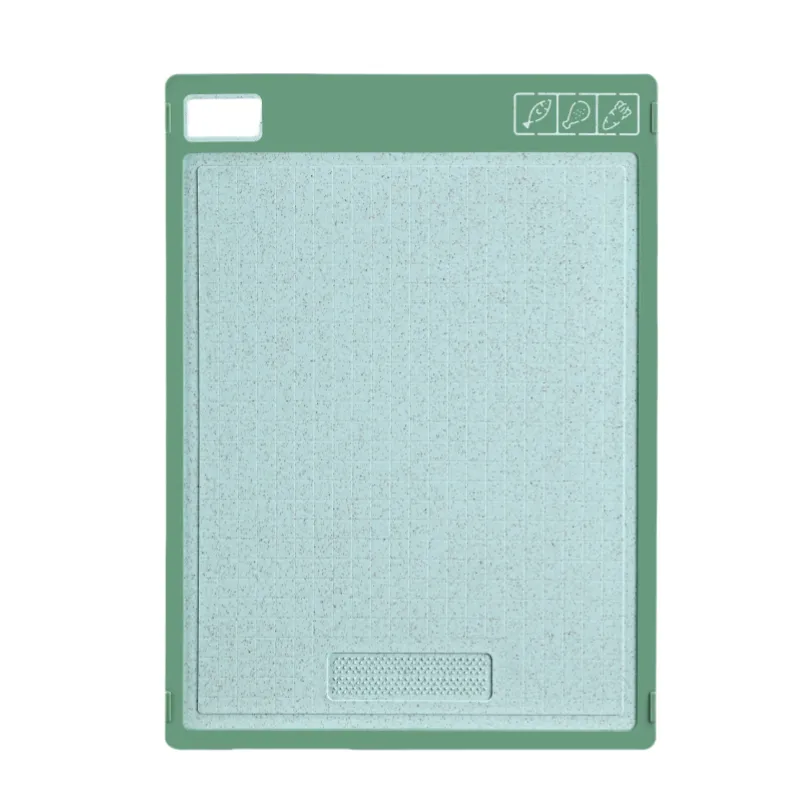
The Three Icons Do More Than the Antibacterial Claim
Where the icon system stops
What the Two-Layer Construction Actually Is
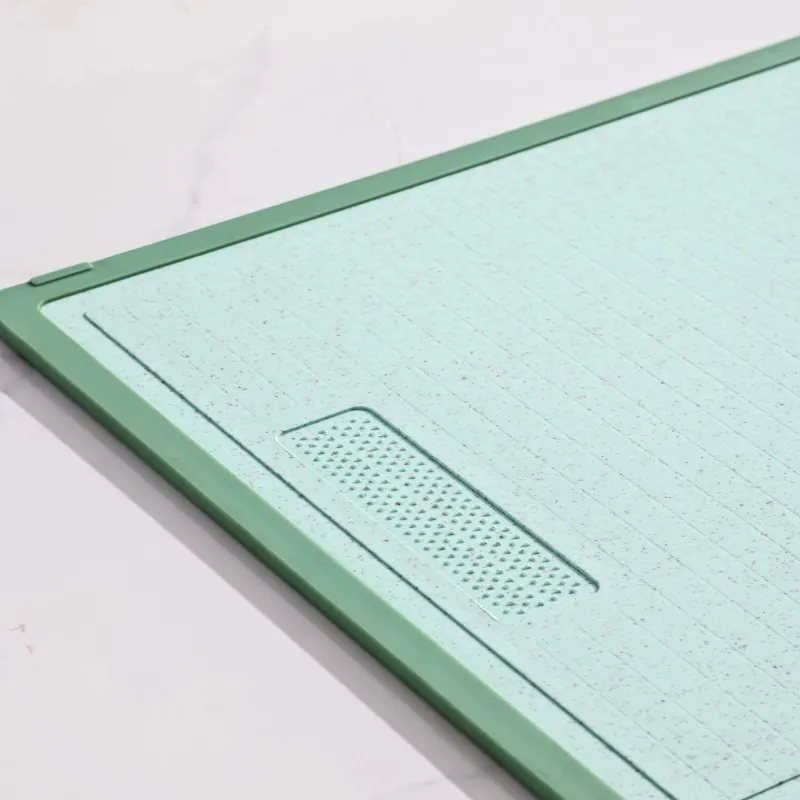
The rim is a lip, not just a colour break
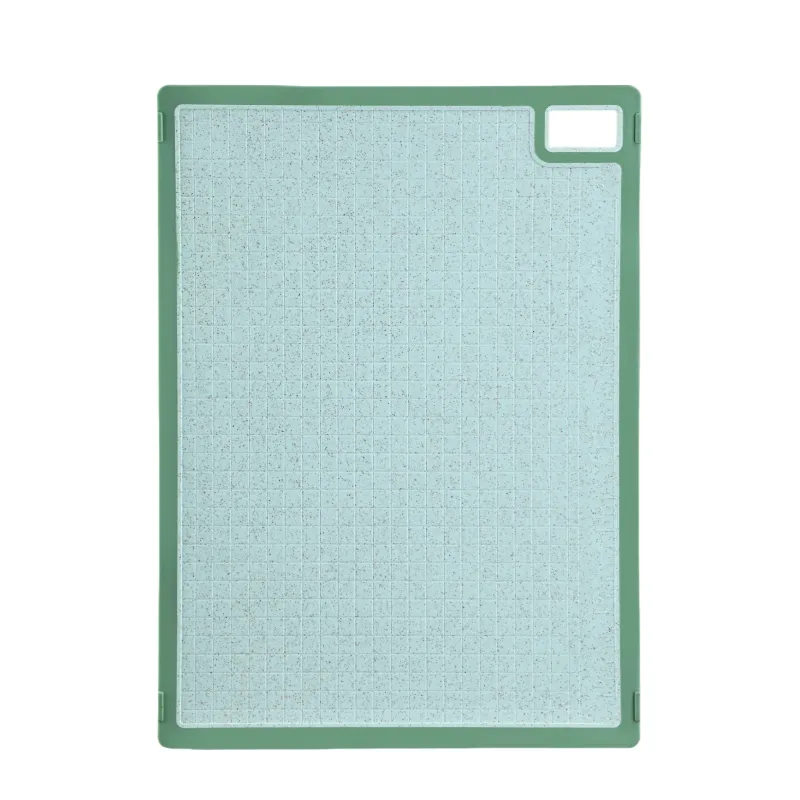
The Grinding Panel Is Worth Explaining to a Buyer
What Antibacterial Means on This Board
Specifications
Model 6640 Size 37 × 27 × 1 cm (approx. 14.6 × 10.6 in) Thickness 10 mm Cutting face Polypropylene with wheat-straw fibre Frame TPE, moulded to the face Colour Green frame, pale speckled cutting face Underside Embossed non-slip pattern Grinding panel Recessed, dotted, bottom edge Icons Knife, fish, meat — moulded into the face Dishwasher Yes Certification FDA, LFGB Reference price USD 2.11 / piece FOB, subject to quantity and packaging Port Shanghai or Ningbo Payment T/T Who This Board Suits
Right for
Wrong for
Ordering and Customisation
Frequently Asked Questions
Is the wheat-straw part biodegradable?
Do the antibacterial additives wash out?
Can the three icons be changed to other foods?
Is it safe in a commercial dishwasher?
What is the minimum order?
Can a sample be sent before ordering?
Need the icon artwork changed for your market?