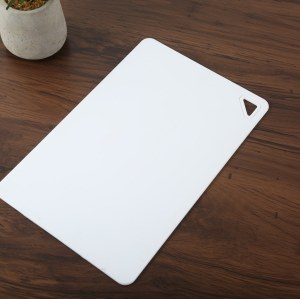
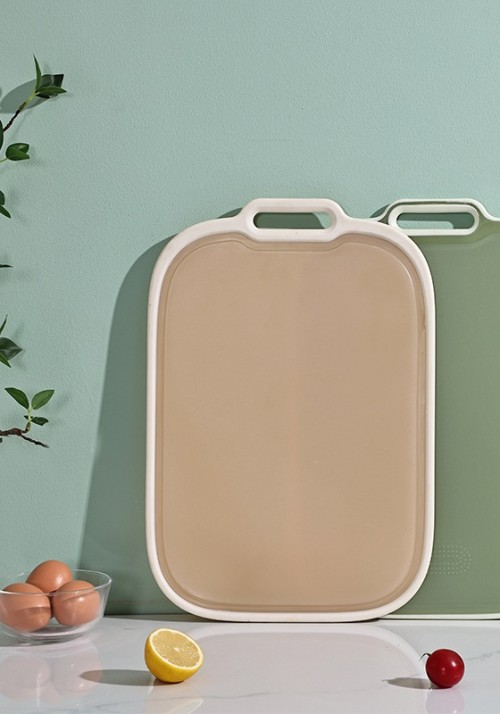
Wholesale Kitchen Double-Sided Antibacterial Plastic Cutting Board | 11" X 16" With Non-Slip Edges And Garlic Grinder
- Price
- US $2.27
- Model
- 6635
- MOQ
- 200 piece
Item specifics
- Material
- TPE throughout, no filler
- Size
- 41 × 28 × 1.1 cm
- Thickness
- 11 mm
- Colour
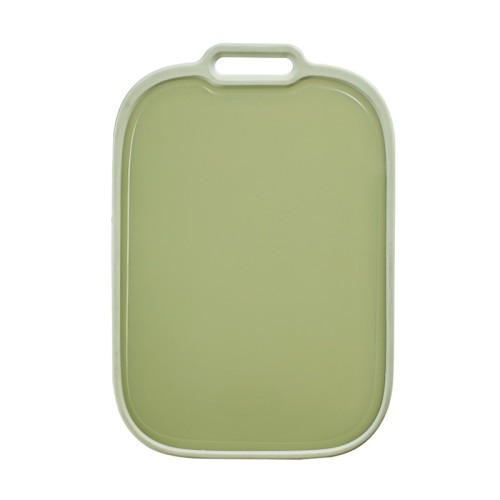
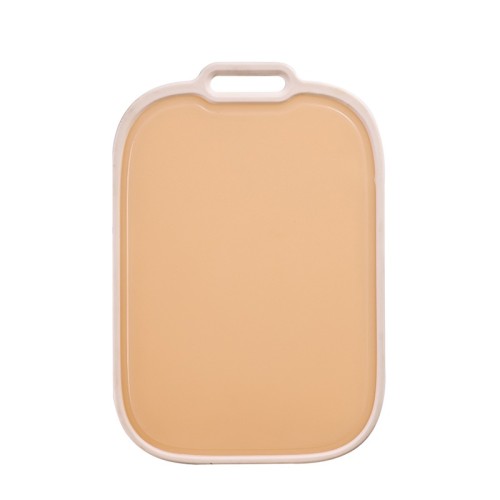
- Green, apricot, and custom matches
- Faces
- Double-sided, both faces plain
- Handle
- Moulded through-hole, top edge
- Underside
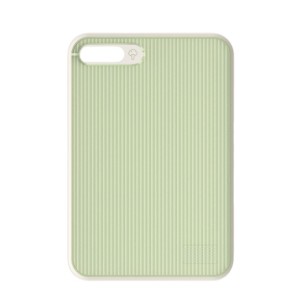
- Embossed non-slip pattern
- Dishwasher
- Yes
- Certification
- FDA, LFGB
- Reference price
- USD 2.27/piece FOB, subject to quantity and packaging
- Port
- Ningbo or Shanghai
Review
Description
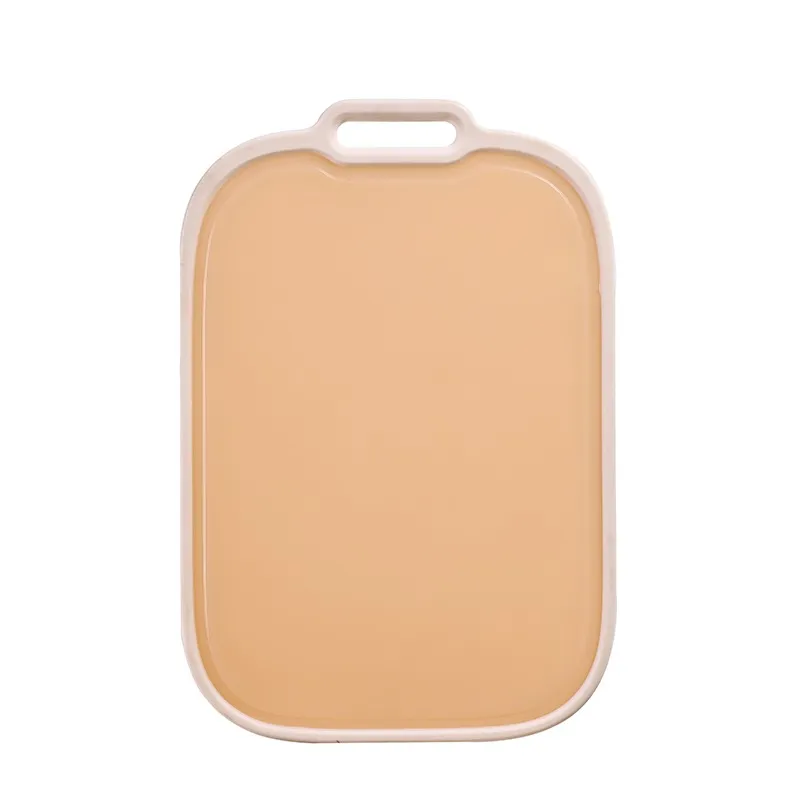
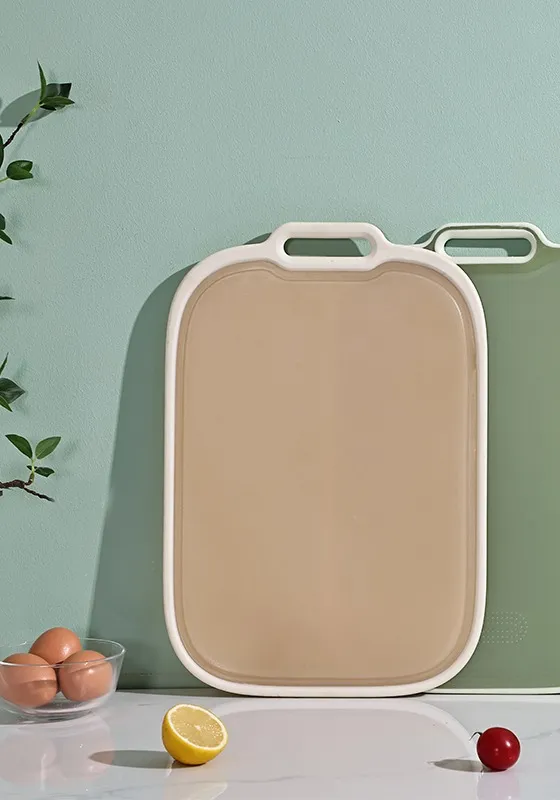
41 × 28 × 1.1 cm · model 6635 · all-TPE, no filler Every other board in this family has a cutting face of polypropylene loaded with wheat-straw fibre. This one does not. It is TPE through the whole section, moulded in two colours, and at 1.1 cm it is also the thickest board the family offers. Those two facts are connected: without a filler the material is softer and less stiff, so the section has to be deeper to keep a 41 cm board flat. That makes this the model to specify when the question is how the board feels under a knife rather than what it costs per unit. It is the most expensive of the four to make and it is the one a chef notices. Wheat straw in a cutting board is a filler. It reduces the share of virgin polymer, it adds stiffness, and it gives the surface the speckled look that buyers associate with eco-positioned products. All of that is useful, and three of the four boards in this family use it. It also makes the cutting face harder. A filled polypropylene face has less give in it, so a knife edge meets something closer to a rigid sheet. This model goes the other way: the whole board is TPE, which is softer and more elastic at the same thickness. Under a blade it deflects slightly and returns, rather than resisting. The gain is a cutter that feels less harsh and an edge that rolls less quickly on contact. The cost is real and should be stated: all-TPE compound is more expensive per kilo than filled PP, the board is heavier for its size, and a soft surface records knife marks more visibly than a hard one. Buyers who want a board that still looks new after a year should choose a filled face instead. At 41 cm long, a board is a beam. Load it in the middle — a hand pressing down, a heavy joint resting — and it wants to bow. Stiffness rises with the cube of thickness, so a small increase in section buys a disproportionate amount of rigidity, which is why this board is 11 mm where the 37 cm models are 10 mm. The 1 mm difference against the 10 mm models is not a marketing figure. It is the reason a 41 cm board sits flat, and it is worth checking against a sample rather than taking on trust. The model is moulded in green and in apricot. Presented as a range they look like two options; presented as a pair they solve a problem, because two boards in two colours let a kitchen separate raw from ready-to-eat without relying on memory. For a retail programme the pair is the stronger proposition: one carton, two colours, and a reason for the customer to buy both. For a distributor it is simpler to stock one colour deeply and the other as the accent, which is the pattern most kitchenware ranges settle into. A knife edge is thin hardened steel. When it meets a surface, one of two things happens: the surface gives, or the edge does. TPE gives. That is why a soft board is described as kind to knives, and it is a genuine effect, not a slogan. It is also not a miracle. Every plastic board — soft or hard — wears an edge over time, and no polymer will keep a knife sharp the way an end-grain wooden block does. What TPE changes is the rate at which micro-rolls at the edge turn into visible dullness. It slows the process; it does not stop it. One practical consequence: a soft surface grips a wet ingredient slightly better than a polished hard one, but it also holds onto fine particles. Rinse it under a tap before it goes in the dishwasher, particularly after mincing. Colour is the main variable, and because the board is single-material the colour runs through the whole section rather than sitting in a separate rim. A custom match therefore has to be agreed as a compound colour, not a paint reference, and it carries a minimum quantity that stock colours do not. Sizes can be changed, but any change to the outline is a new tool. On this model the size conversation usually starts with the 11 mm section, because that is what a buyer is actually buying. Reference price is FOB and excludes packaging, printing and freight. Custom compound colours carry a higher minimum than stock green and apricot — send the target shade and a quote follows. Not inherently. Both are non-porous and both need washing after raw meat. The difference is mechanical: a softer surface marks more easily, so inspect it for deep cuts over time and replace when the marks hold residue. Because TPE without filler is less stiff. A 41 cm board in a 10 mm section would flex more than the same length in filled PP, so the section is taken to 11 mm to keep it flat under load. The photographs show both faces plain. Grinding areas appear on other models in this family, and some configurations of this one can include one on the reverse. Confirm the configuration at quotation stage so the specification sheet matches what ships. Slower than a hard plastic face, because the surface yields instead of the edge. It will not keep a knife sharp the way an end-grain wooden block does — no polymer will. Yes, as a compounded colour rather than a surface finish, since the material is the colour. Custom matches carry a higher minimum quantity than stock green and apricot. It depends on the colour decision first, because stock colours and custom compounds have different minimums. Packaging format affects it too. Send the specification and a specific minimum will be quoted. Ask for the 11 mm section in green and apricot, and judge the feel against a filled face before committing to a volume. OEM and ODM welcome · FOB Shanghai or Ningbo · T/T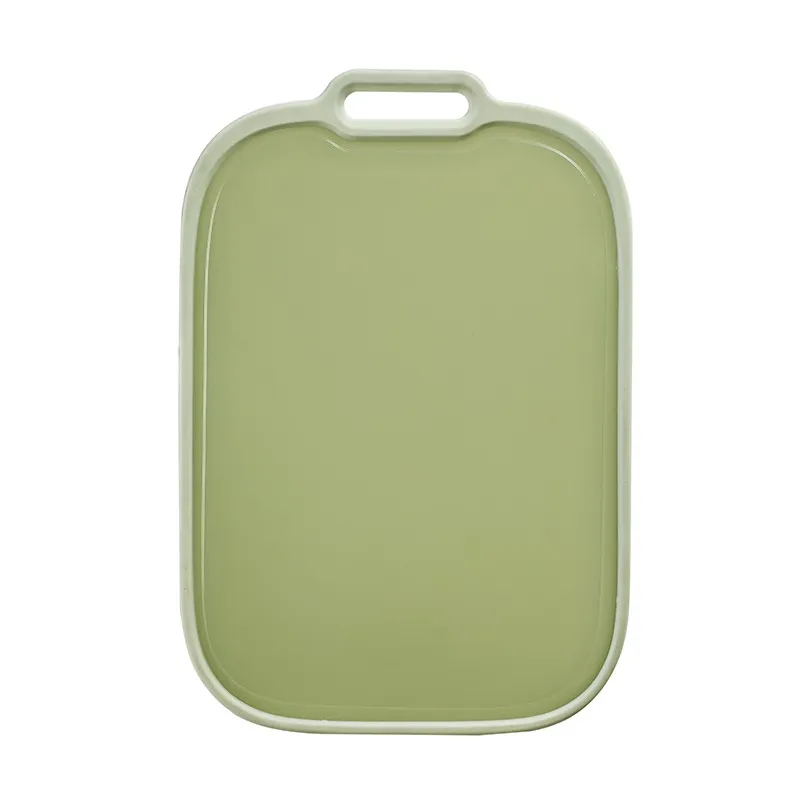
This Is the One Without Wheat Straw
What that is worth, and what it costs
Why the Section Is 11 mm
Two Colours, Sold as a Pair
What TPE Does to a Knife Edge
Specifications
Model 6635 Size 41 × 28 × 1.1 cm (approx. 16.1 × 11.0 in) Thickness 11 mm Material TPE throughout, no filler Colour Green, apricot, and custom matches Shape Rectangular with rounded corners Faces Double-sided, both faces plain Handle Moulded through-hole, top edge Underside grip Embossed non-slip pattern Dishwasher Yes Certification FDA, LFGB Reference price USD 2.27 / piece FOB, subject to quantity and packaging Port Ningbo or Shanghai Payment T/T Who This Board Suits
Right for
Wrong for
Ordering and Customisation
Frequently Asked Questions
Is an all-TPE board more hygienic than a filled one?
Why is this board thicker than the others in the family?
Some listings mention a garlic grinder. Is it on this board?
Will a soft board dull a knife faster or slower?
Can the colour be matched to a brand palette?
What is the minimum order quantity?
Want a sample of the unfilled board?